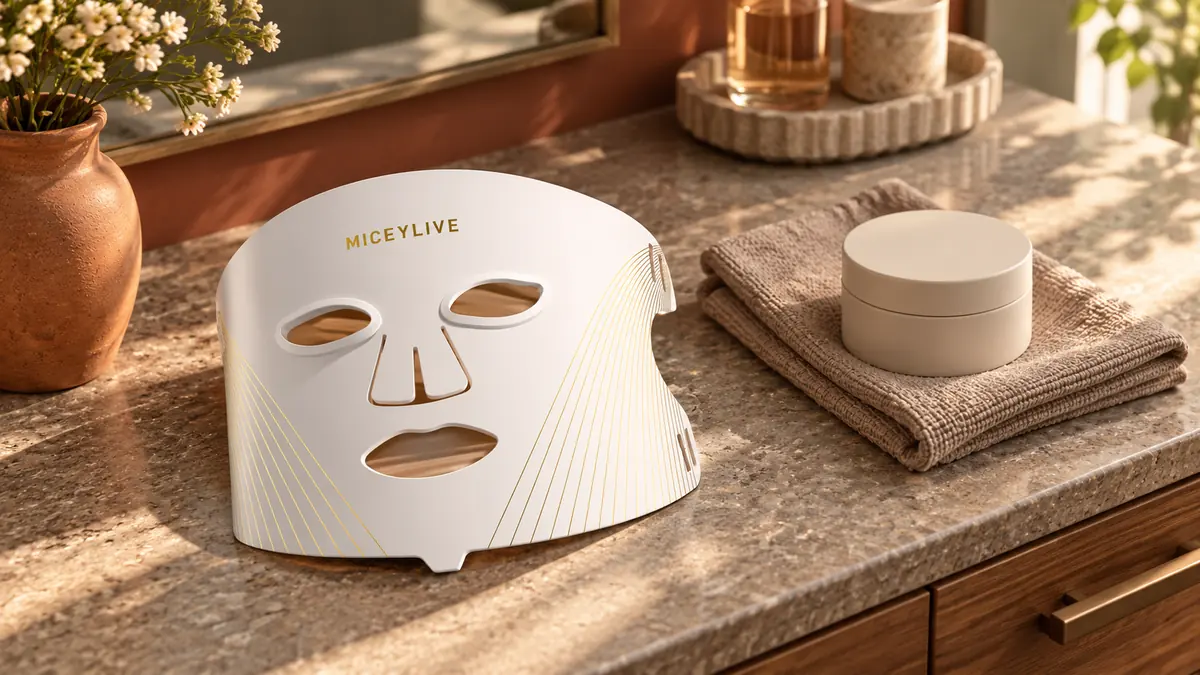
The Absolute Water Ban: Why You Must Never Submerge or Rinse an LED Mask
At MICEYLIVE, we help you understand face and body light-care formats before choosing a device.
Key Device Hygiene Takeaways: Essential Cleaning Rules
-
The Absolute Water Ban: LED face masks carry an unsealed IPX0 ingress rating and must never be submerged in water, rinsed under a running faucet, or soaked in a sink.
-
Mandatory Power Disconnect: Always unplug external battery controllers, power cords, and USB charging connectors prior to performing any surface cleaning.
-
Silicone vs. Chemical Solvents: Medical-grade silicone resists mild detergents and alcohol wipes, but harsh industrial chemicals degrade polymer cross-links.
-
70% Isopropyl Alcohol Standard: Wiping surfaces with pre-moistened 70% isopropyl alcohol wipes provides rapid, reliable broad-spectrum sanitization without pooling moisture.
-
Prevent Acne Mechanica: Post-treatment cleaning removes sebum, sweat, and Cutibacterium acnes, preventing device-induced follicular occlusion and inflammatory breakouts.
-
Dry Flat Before Storage: Always allow sanitized surfaces to air-dry completely flat on a clean towel before placing the device into a breathable dust bag.
Investing in an at-home light-emitting diode (LED) face mask introduces an immediate, high-stakes maintenance question: can you rinse or wash your mask under the tap to keep it fresh? Across biomedical engineering standards and electrotechnical safety protocols, the answer is an unconditional, non-negotiable no. Wearable flexible and rigid consumer LED masks are classified under International Electrotechnical Commission (IEC) standards as IPX0 appliances. An IPX0 designation confirms that an electronic enclosure provides zero specialized protection against moisture or liquid ingress. Flexible silicone masks are engineered using multi-layer laminated polymer envelopes that enclose flexible printed circuit (FPC) ribbons and surface-mount diodes (SMDs). While these seams are bonded against atmospheric dust, they are not hermetically sealed against pressurized fluids or hydrostatic submersion.
When an IPX0 wearable device is held beneath a running bathroom faucet or submerged in a sink of soapy water, fluid is drawn into internal FPC layers via rapid capillary action. Once liquid penetrates the inner layers, tap water minerals act as electrical electrolytes, bridging active copper circuit traces. This capillary fluid ingress induces catastrophic short-circuiting, galvanic corrosion across copper busbars, and irreversible driver burnout. A single submersion event permanently destroys internal diode circuitry, voids manufacturer warranties, and transforms an expensive phototherapy investment into an unusable electronic brick.
To eliminate all risk of electrical shock or localized internal short-circuiting, device sanitation must follow a strict electrical safety boundary. Before any damp cloth, disinfectant wipe, or sanitizing mist touches the surface of the mask, the user must completely disconnect the device from its external power source. This requires unplugging rechargeable handheld battery controllers, detaching USB-C or proprietary connector cables, and disconnecting any wall-outlet AC transformers. Cleaning an electrically energized appliance introduces serious moisture-bridging hazards that can short the control board or discharge current.
Material Science: Silicone Surface Disinfection vs. Polycarbonate Lens Crazing
Safely maintaining an LED face mask requires understanding the unique materials science governing wearable aesthetic devices. The body of modern flexible masks is constructed from medical-grade polydimethylsiloxane (PDMS), commonly known as medical liquid silicone. Liquid silicone is prized in clinical dermatology for its biocompatibility, flexibility, hypoallergenic profile, and robust chemical resistance to water and polar solvents. The inorganic siloxane (silicon-oxygen) backbone of PDMS resists degradation from water-diluted surfactants, gentle neutral soaps, and short-contact alcohols. However, silicone is not indestructible; prolonged exposure to aggressive non-polar solvents, concentrated petrochemicals, or strong mineral acids causes polymer chain swelling, embrittlement, and surface degradation.
While the exterior chassis consists of resilient silicone, the optical emission windows protecting each miniature LED bulb are manufactured from transparent thermoplastics—principally optical-grade polycarbonate (PC) or polymethyl methacrylate (PMMA). Polycarbonate offers high mechanical impact resistance and exceptional optical clarity, transmitting over 90% of emitted photons across visible red (630–660 nm) and near-infrared (830–850 nm) wavelengths. However, polycarbonate exhibits extreme sensitivity to solvent-induced environmental stress crazing, manifesting visually as fine spider-web micro-cracking, structural clouding, and irreversible surface hazing across the diode windows.
Once an optical window suffers crazing, incident photons undergo severe lateral scattering and back-reflection instead of penetrating smoothly into human cutaneous tissue. As a result, delivered target fluence is drastically attenuated, permanently degrading the anti-aging efficacy of the device. Consequently, owners must strictly avoid aggressive cleaning chemicals: pure acetone (nail polish remover), undiluted sodium hypochlorite (bleach), ammonia-based glass cleaners (Windex), and concentrated essential oils. These harsh compounds dissolve silicone polymer cross-links and permanently craze optical lenses.
Microbial Hygiene: How Dirty Masks Trigger Acne Mechanica
Beyond protecting internal electrical hardware and lens optics, maintaining rigorous mask hygiene is an indispensable dermatological requirement for clear, healthy skin. During a standard 10-to-15-minute light therapy session, the flexible silicone mask is strapped snugly against the facial epidermis. As operating diodes emit minor semiconductor warmth, facial skin perspires, transferring epidermal sebum, sweat salts, and exfoliated stratum corneum squames directly onto the inner silicone lining. The human facial microbiome naturally hosts billions of commensal microorganisms, dominated by Cutibacterium acnes, Staphylococcus epidermidis, and transient bacterial strains.
When a user finishes a session and sets the mask aside without sanitizing it, residual sebum, moisture, and cellular debris form an ideal organic breeding ground. Pathogenic and commensal bacteria rapidly colonize the moist silicone surface, forming micro-biofilms within hours. If this uncleaned mask is subsequently re-strapped against the face, it produces the classic dermatological syndrome known as acne mechanica. First identified in clinical studies evaluating tight athletic headgear, acne mechanica occurs through the destructive triad of repetitive friction, localized thermal heat, and physical occlusion.
Pressing contaminated silicone firmly against the skin forces oxidized sebum and concentrated bacterial populations back into vulnerable pilosebaceous units. Trapped beneath the non-porous silicone envelope, follicular infundibula undergo rapid hyperkeratosis, creating micro-comedones that quickly transform into tender inflammatory papules, pustules, and cystic flares. Many device owners mistakenly assume their LED mask is causing an adverse reaction to light therapy, when in reality the breakouts are entirely driven by microbial cross-contamination and uncleaned contact surfaces. Sanitizing the mask between every single use is the non-negotiable safeguard that prevents device-induced acne.
The Sanitizer Showdown: 70% Isopropyl Alcohol vs. Hypochlorous Acid (HOCl)
LED Mask Sanitizer Chemical Safety & Compatibility Matrix
-
70% Isopropyl Alcohol (IPA) Pre-Moistened Wipes: Silicone Compatibility: Fully Approved. Polycarbonate Lens Safety: Safe for surface wiping (avoid pooling or soaking). Antimicrobial Rating: Rapid broad-spectrum bactericidal, virucidal, and fungicidal efficacy within 30 seconds. Best Practice: Use pre-moistened wipes to prevent liquid runoff.
-
Hypochlorous Acid (HOCl 100–200 ppm) Solution: Silicone Compatibility: Optimal / Zero Degradation. Polycarbonate Lens Safety: Completely Non-Crazing / 100% Optically Neutral. Antimicrobial Rating: Exceeds 99.99% kill rate against S. aureus and C. acnes in 30 to 60 seconds. Best Practice: Ideal gentle sanitizer for reactive, rosacea-prone, or sensitive skin types.
-
Damp Microfiber with Fragrance-Free Gentle Soap: Silicone Compatibility: Fully Approved. Polycarbonate Lens Safety: Fully Approved. Antimicrobial Rating: Physical lipid removal and surfactant bacterial lift. Best Practice: Ideal for weekly deep-cleaning to strip sebum residue without chemical drying.
-
Pure Acetone, Bleach, Ammonia & Essential Oils: Silicone Compatibility: Severe Degradation / Polymer Swelling. Polycarbonate Lens Safety: Immediate Environmental Stress Crazing and Clouding. Antimicrobial Rating: Harsh Industrial Chemicals. Verdict: Strictly Prohibited; causes irreversible physical and optical hardware failure.
Selecting the correct disinfectant requires balancing rapid germicidal efficacy against long-term polymer preservation. The global gold standard for surface disinfection in healthcare and aesthetics is 70% isopropyl alcohol (IPA). Many consumers mistakenly assume that higher alcohol concentrations—such as 91% or 99% pure rubbing alcohol—provide superior sanitization, but biophysical chemistry proves the exact opposite. Pure 99% alcohol evaporates almost instantaneously, failing to achieve the necessary contact time required for disinfection. More critically, pure alcohol instantly coagulates the outer surface proteins of bacterial cell walls, creating an impenetrable protective shell that shields internal pathogens from lysis.
In contrast, a 70% isopropyl alcohol formulation contains 30% purified water. The presence of water molecules acts as a vital chemical catalyst, slowing evaporation and keeping microbial membranes hydrated. This allows the alcohol molecules to diffuse smoothly through cell wall pores into the cytoplasm, where they denature vital structural proteins and dissolve bacterial cell membranes completely within 30 to 60 seconds. However, because repetitive liquid pooling can stress polycarbonate optical windows, alcohol must never be poured onto the mask. Instead, users should utilize individual, pre-moistened 70% IPA wipes or a lint-free microfiber cloth lightly dampened with 70% IPA, wiping surfaces firmly without leaving standing liquid.
For individuals with highly reactive, eczema-prone, or rosacea-affected skin, hypochlorous acid (HOCl) represents the premier, non-toxic sanitizing alternative. Naturally synthesized endogenously by human myeloperoxidase in activated white blood cells to combat infection, hypochlorous acid is a remarkably potent antimicrobial agent. At stabilized concentrations of 100 to 200 parts per million (ppm) and a skin-neutral pH (4.5 to 6.0), HOCl carries a neutral electrical charge. Because bacterial cell walls are negatively charged, negatively charged bleach molecules are repelled, whereas uncharged HOCl penetrates microbial barriers unhindered, achieving an extraordinary >99.99% kill rate against Staphylococcus aureus, Cutibacterium acnes, and common viruses within 30 to 60 seconds.
Unlike alcohol, which can emit drying fumes or sting sensitized facial skin if minute residues remain, hypochlorous acid is completely biocompatible, non-irritating, and non-cytotoxic to human keratinocytes. Crucially for device longevity, HOCl exhibits complete material neutrality toward medical silicone and polycarbonate optical lenses. It causes zero polymer swelling, zero plasticizer leaching, zero lens clouding, and zero optical attenuation over thousands of cleaning cycles. Applying an HOCl spray onto a microfiber cloth and wiping the mask delivers hospital-grade disinfection without any risk of chemical irritation or device degradation.
For routine weekly care, combining physical surfactant cleaning with HOCl sanitization provides the ultimate maintenance regimen. While alcohol and HOCl effectively eliminate microbial life, they do not dissolve dense, dried facial sebum deposits. Using a warm microfiber cloth lightly dampened with a drop of fragrance-free, gentle facial cleanser physically lifts lipid build-up and exfoliated skin squames from the silicone base. Following this gentle surfactant wipe with an HOCl or 70% IPA pass ensures both mechanical cleanliness and absolute microbiological sterility.
Step-by-Step Cleaning Protocol: The 4-Step Hygiene Blueprint
The 4-Step Post-Treatment Cleaning Checklist
-
[ ] Step 1: Power Disconnect: Detach handheld battery pack, unplug power cord, and remove USB cables immediately after turning off the mask.
-
[ ] Step 2: Surface Sanitization Wipe: Firmly wipe the inner facial contact surface, nose bridge, eye inserts, and outer perimeter using a pre-moistened 70% IPA wipe or HOCl-dampened microfiber.
-
[ ] Step 3: Complete Air-Drying Flat: Rest the mask completely flat on a clean dry microfiber towel in a well-ventilated area for 5 to 10 minutes until bone-dry.
-
[ ] Step 4: Breathable Dust Pouch Storage: Place the completely dry device inside a lint-free, breathable storage pouch, keeping it stored flat away from direct sunlight, heat, and crushing weight.
Maintaining an at-home LED face mask requires less than 60 seconds of post-treatment care. Establishing this simple, repeatable habit ensures absolute dermatological safety and protects sensitive electronic circuitry. Step 1: Power Disconnection. Immediately upon concluding your light therapy session, power down the device and disconnect all electrical inputs. Unplug the handheld rechargeable battery pack, detach the magnetic or USB-C connector from the mask socket, and unplug any wall-outlet transformer leads. Disconnecting power eliminates any hazard of electrical bridging or accidental power activation while cleaning contact surfaces.
Step 2: Gentle Surface Sanitization. Take a fresh, pre-moistened 70% isopropyl alcohol wipe or a clean microfiber cloth dampened with hypochlorous acid (100–200 ppm). Gently but thoroughly wipe down the inner silicone contact surface of the mask, paying close attention to areas that press firmly against the skin: the forehead strip, nose saddle, cheek contours, and chin strap. Gently wipe across the clear protective diode windows using light pressure, removing any transferred facial oils or perspiration. Wipe the flexible silicone eye inserts and adjustable head-strap perimeter. Ensure the wipe is damp but never dripping; no liquid should ever bead up or pool around the diode borders or electrical cable sockets.
Step 3: Complete Flat Air-Drying. After sanitizing the device, do not pack it away immediately. Lay the mask completely flat, diode-side up, on a clean, dry microfiber towel or a clean tabletop in a well-ventilated room. Allow residual alcohol or HOCl moisture to evaporate naturally for 5 to 10 minutes until the surface is bone-dry to the touch. Never attempt to accelerate drying using heat sources like hair dryers or placing the device on home radiators, as excessive thermal heat degrades silicone elasticity and warps internal electronic components.
Step 4: Breathable Protective Storage. Once the mask is completely dry, slide it into its dedicated breathable, lint-free dust bag or protective storage case. Store the mask lying flat on a shelf or inside a vanity drawer, safely shielded from direct solar ultraviolet radiation, high humidity, and curious household pets. Never stack heavy books, makeup kits, or bathroom accessories on top of the device, as crushing downward pressure can crack internal soldered flexible printed circuits.
Routine Maintenance & Safe Storage: Maximizing Hardware Lifespan
To maximize the operational lifespan of a medical-grade LED mask, device care should be divided into routine daily maintenance and periodic deep cleaning. The quick 4-step sanitization protocol—a thorough wipe-down with 70% IPA or HOCl—must be executed after every single treatment session without exception. This daily habit neutralizes fresh sebum and prevents microbial biofilm formation before bacteria have the opportunity to multiply.
In addition to daily wiping, conducting a weekly deep-clean is highly recommended, particularly for users with oily or acne-prone skin. Over several treatment sessions, microscopic lipid residues, natural skin waxes, and exfoliated corneocytes can form a faint, cloudy film across the silicone chassis and diode apertures. To remove this buildup, wet a premium microfiber cloth with warm water and add a single drop of fragrance-free, gentle facial cleanser (such as Cetaphil or Vanicream). Wring out the microfiber cloth thoroughly until it is barely damp and contains zero dripping liquid. Gently buff the silicone surface and diode windows in small circular motions to emulsify and lift stubborn oil residues. Follow immediately with a cloth dampened only with pure water to remove surfactant traces, followed by an HOCl or 70% IPA wipe to sanitize the refreshed surface.
A critical post-cleaning mistake made by many consumers is sealing a freshly wiped device inside an airtight plastic zip-top bag or sealed silicone pouch. While sealing an appliance seems like an intuitive way to keep dust out, trapping micro-droplets of residual moisture inside an unventilated micro-environment creates high relative humidity. Over days and weeks, trapped moisture encourages fungal and mold spore germination and accelerates galvanic oxidation of metal connector pins inside the charging port. Device storage pouches must always be crafted from breathable, lint-free fabric—such as soft micro-suede, cotton, or unsealed satin—allowing continuous air exchange while keeping environmental dust at bay.
Environmental conditions in storage also dictate long-term hardware reliability. Flexible silicone masks contain intricate flexible printed circuits (FPC) with copper conductor traces less than 0.1 mm thick. Users must never fold, tightly roll, or sharply crease a flexible LED mask during storage or transit. Sharp creasing introduces severe mechanical shear strain, fracturing delicate copper traces and causing permanent diode row outages. Furthermore, keep the device away from south-facing windows; prolonged exposure to solar ultraviolet rays gradually photodegrades silicone polymer backbones, resulting in yellowing, loss of tensile flexibility, and embrittlement. Storing the mask flat, clean, and dry ensures it delivers consistent, calibrated clinical irradiance for years.
Critical Don’ts & FAQ: Avoiding Common Device-Damaging Mistakes
Maintaining an LED face mask requires disciplined storage and handling practices both at home and while traveling. Device owners should always store the appliance completely flat inside a cushioned, breathable storage sleeve away from direct solar ultraviolet rays, ambient humidity, and heavy crushing loads. Protecting internal flexible printed circuits from tight bends and sharp creases ensures consistent, flicker-free diode illumination across years of regular use.
Frequently Asked Questions: LED Face Mask Hygiene & Care
-
Can I spray disinfectant spray or hypochlorous acid directly onto my LED face mask? No, you must never spray liquid cleaners directly onto the face of the mask. Direct aerosol or pump spraying creates airborne droplets that land unevenly and pool into the minute gaps between thermoplastic diode windows and the silicone chassis. Furthermore, liquid mist easily penetrates unsealed USB-C charging sockets or controller ports, leading to internal component corrosion and short-circuits. Always mist your disinfectant spray onto a clean microfiber cloth first, and then use the dampened cloth to wipe the mask.
-
Can multiple family members or friends share the same LED face mask safely? Yes, sharing an LED mask is completely safe provided strict intermediate disinfection protocols are enforced. Because the mask makes direct physical contact with facial sebum, sweat, and Cutibacterium acnes, passing an uncleaned mask between users risks transferring bacteria and triggering cross-contamination breakouts. Before a new user wears the device, thoroughly wipe the entire contact surface with a 70% isopropyl alcohol wipe or hypochlorous acid solution, allowing it to air-dry completely for 10 minutes.
-
Can I use baby wipes, makeup remover wipes, or disinfectant kitchen wipes to clean my mask? No, standard cosmetic baby wipes and makeup remover wipes are not suitable for cleaning an LED mask. Baby wipes and makeup wipes are heavily formulated with moisturizing oils, dimethicone silicones, conditioning emollients, and fragrances. These ingredients leave a greasy, refractive residue across the transparent diode lenses, scattering and attenuating light transmission. Similarly, household kitchen disinfectant wipes (such as Clorox or Lysol) contain harsh quaternary ammonium compounds, bleach derivatives, or fragrances that craze polycarbonate lenses and degrade silicone. Stick exclusively to 70% IPA wipes, HOCl sprays, or mild soapy microfiber cloths.
-
What should I do if water accidentally gets inside my LED face mask or charging port? If the device is accidentally exposed to water or splashed near a sink, disconnect power immediately. Do not attempt to turn the device on or connect it to a charger to 'see if it still works,' as running electrical current through wet circuitry causes instant electrolytic shorting and permanent driver failure. Gently shake out any standing moisture, pat the exterior dry with a towel, and place the mask flat in a warm, dry room with strong airflow (or near a desiccant pack) for at least 48 hours to allow internal moisture to dissipate completely before testing.
-
What simple maintenance routine ensures my mask remains clean and functional over time? Executing the 4-step sanitization protocol immediately following every treatment session—power disconnect, gentle surface wipe with 70% IPA or HOCl, complete flat air-drying, and breathable pouch storage—keeps the device hygienically clean and fully operational across years of regular use.
-
How does disciplined device hygiene preserve overall light therapy outcomes? Ultimately, safe and effective light therapy depends equally on clinical wavelength precision and disciplined device hygiene. By enforcing the strict water submersion ban, selecting safe sanitizing agents like 70% isopropyl alcohol wipes or hypochlorous acid, and allowing the device to air-dry completely flat, users protect their skin from acne mechanica while ensuring their phototherapy device delivers optimal therapeutic fluence for years to come.
Compare the documented controls and formats in our MICEYLIVE face light therapy collection.
For the next step, read our guide to How to Use an LED Face Mask: The Definitive Routine & Care Guide.