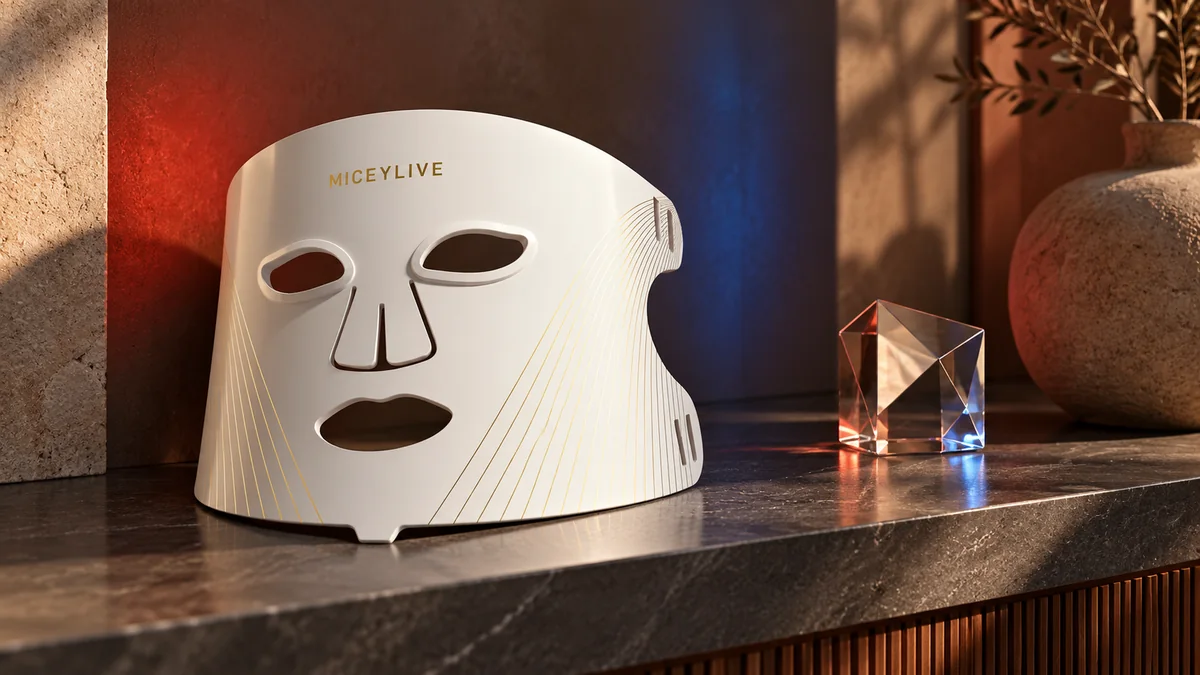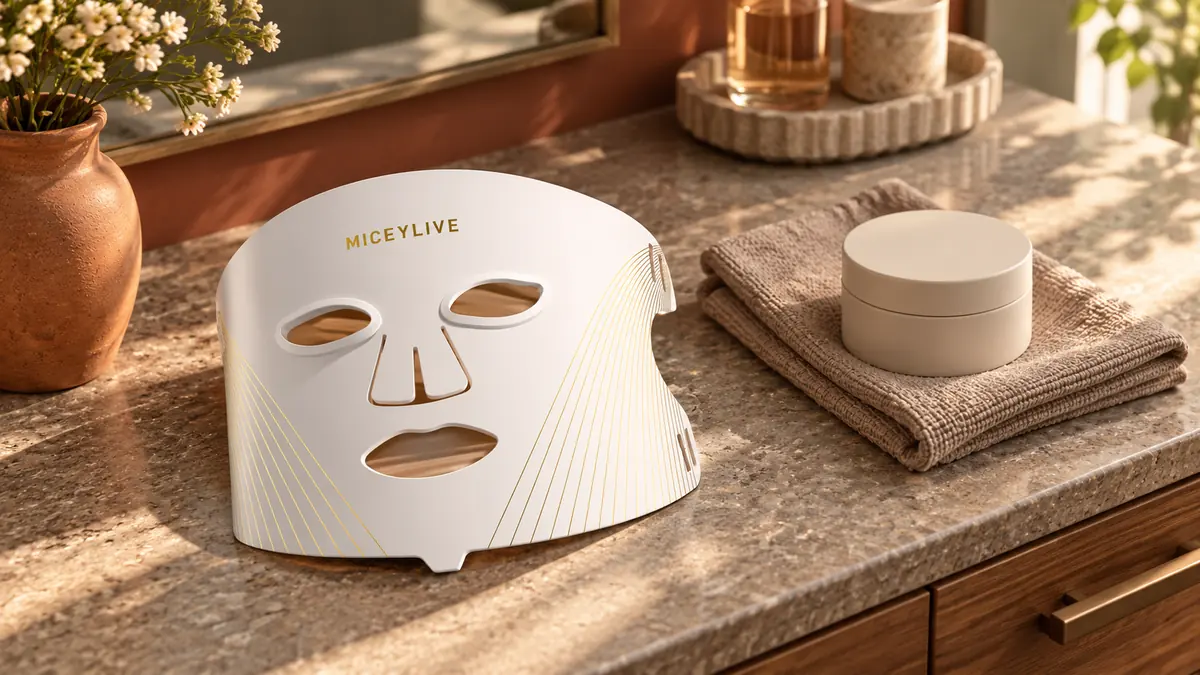
At-home light-emitting diode (LED) face masks have transitioned from clinical dermatology offices into everyday skincare regimens, offering non-invasive cellular phototherapy. However, achieving clinically validated improvements in skin texture, collagen density, and acne reduction requires more than wearing a luminous mask at random intervals; it requires an evidence-grounded, biophysically calibrated routine.
At MICEYLIVE, we help you understand face and body light-care formats before choosing a device.
Because consumer LED devices operate at calibrated at-home power densities, therapeutic outcomes depend upon consistent, properly dosed sessions—typically 10 to 15 minutes per treatment, three to five times weekly—adhering strictly to biological stimulation thresholds rather than excessive daily exposure.
-
The Optical Clean-Skin Rule: Facial skin must be completely cleansed of makeup, heavy sebum, and opaque physical mineral sunscreens before every session; zinc oxide, titanium dioxide, and dense lipids reflect and scatter therapeutic light photons, attenuating dermal penetration.
-
Skincare Layering Precision: Treat on completely bare, dry skin or over lightweight, pure water-based humectants (such as oil-free hyaluronic acid or glycerin); never apply thick occlusive moisturizers, plant oils, or dimethicone heavy products prior to light exposure.
-
Calibrated Treatment Dosing: Restrict sessions to 10–15 minutes per treatment; clinical testing confirms this window delivers optimal energy density for skin rejuvenation.
-
Consistent Weekly Frequency: Administer light therapy 3 to 5 times weekly during an initial 8- to 12-week loading phase, followed by 1 to 2 weekly maintenance sessions once desired complexion smoothing is achieved.
-
Electrical Device Hygiene: Always disconnect your mask from its power source and sanitize the silicone surface using a soft, damp lint-free cloth or an alcohol-free disinfectant wipe; never submerge an electrical LED mask in water or wash it under running faucets.
Step 1: Pre-Treatment Preparation and the Optical Clean-Skin Rule
The foundational rule of effective photobiomodulation is establishing an unimpeded optical pathway between the emitting diodes and the target chromophores within the dermis. Human skin naturally accumulates atmospheric particulates, oxidized sebum, cosmetic pigments, and sunscreen filters throughout the day. When light photons encounter physical mineral sunscreens—specifically micro-fine particles of zinc oxide and titanium dioxide—the optical properties of these pigments act as physical reflectors and diffusers, scattering light before it can reach dermal fibroblasts. Similarly, dense occlusive lipids and heavy synthetic silicones alter the refractive index of the stratum corneum, causing significant optical attenuation. Consequently, beginning an LED treatment over residual cosmetics or daytime sunscreen severely compromises delivered fluence, rendering the session largely ineffective.
To prepare the cutaneous barrier properly, cleansing should be performed using a gentle, non-stripping water-soluble cleanser that thoroughly dissolves lipid residues without disrupting the acid mantle. Abrasive physical face scrubs, granular exfoliants, and aggressive cleansing brushes must be strictly avoided immediately prior to placing an LED mask on the face. Close-contact silicone arrays create subtle micro-climatic warmth against the skin; combining this direct contact with mechanically sensitized or micro-scratched skin significantly heightens erythema, localized inflammation, and epidermal barrier irritation. After cleansing, pat the skin entirely dry with a clean cotton towel before donning the device.
Establishing a completely clean, dry baseline ensures that the therapeutic window—typically 10 to 15 minutes of direct photon delivery—transfers optimal power density directly into cellular tissue.
Step 2: Skincare Layering — What to Apply Before, After, or Stagger
The question of whether to apply skincare products before or after an LED mask is among the most debated topics in modern aesthetic routines. From an optical biophysics perspective, completely bare, dry skin serves as the gold standard baseline for treatment. Clean skin provides a predictable refractive interface, allowing photons to penetrate without unintended chemical interactions or optical diffraction. However, individuals with dry, compromised, or dehydrated barriers may choose to apply a thin layer of a pure, water-based humectant—such as unbuffered low-molecular-weight hyaluronic acid or pure vegetable glycerin—directly before putting on the mask. Because pure water-based humectants lack lipid droplets, emulsifying waxes, or opaque polymers, they remain optically translucent and do not obstruct photon transmission, while simultaneously mitigating surface dryness during the session. Conversely, all oil-based serums, dense emulsions, facial balms, and heavy squalane formulations must remain strictly post-treatment steps.
When designing your routine, potent chemical actives must be carefully separated from active light exposure. Combining photosensitizing compounds directly under close-fitting optical diodes frequently results in contact sensitization and marked facial redness.
Once the light therapy session concludes, the skin barrier exhibits heightened receptivity and enhanced cutaneous microcirculation, creating an ideal window for restorative skincare application.
-
Before LED Therapy (Clean Baseline): Treat on bare dry skin or apply a thin layer of pure water-based hyaluronic acid or glycerin. Heavy oils, mineral SPF, and occlusives must be strictly avoided.
-
Alternate Evenings (Active Exfoliants & Retinoids): Never apply prescription tretinoin, retinol, AHA/BHAs, or benzoyl peroxide beneath an active LED mask; schedule them for non-treatment evenings to avoid acute irritation.
-
After LED Therapy (Barrier Recovery): Apply nourishing ceramide complexes, copper peptides, Centella asiatica, and barrier moisturizers to seal in hydration and support tissue remodeling.
| Routine Stage | Permitted Skincare Actives | Prohibited / Staggered Formulations | Dermatological Rationale |
|---|---|---|---|
| Before LED Session | Clean bare skin; pure water-based Hyaluronic Acid; simple Glycerin serums | Heavy facial oils, occlusive balms, mineral SPF, retinoids, AHA/BHAs | Prevents photon scatter and avoids optical barriers or photo-induced contact dermatitis. |
| Alternate Evenings | Prescription Tretinoin, Retinol, Glycolic Acid, Salicylic Acid, Benzoyl Peroxide | Occlusive application directly beneath glowing LED diodes | Prevents compound irritation, severe barrier compromise, and heightened erythema. |
| After LED Session | Ceramide complexes, Copper Peptides, Centella Asiatica, Squalane, barrier creams | Immediate harsh alcohol toners or abrasive physical scrubs | Restores lipid barrier and locks in deep hydration following tissue microcirculation. |
Managing Active Ingredients: Retinoids, AHA/BHAs, and Benzoyl Peroxide
Prescription retinoids (such as tretinoin, tazarotene, and trifarotene), over-the-counter retinol, alpha-hydroxy acids (glycolic and lactic acids), beta-hydroxy acids (salicylic acid), and benzoyl peroxide represent powerful dermatological tools that require strategic scheduling when combined with phototherapy. While red and near-infrared light wavelengths do not emit ultraviolet radiation, the physical occlusion of an illuminated mask against skin coated in concentrated acids or retinoids significantly accelerates product penetration unpredictably while trapping localized diode heat. This combination frequently induces acute retinoid dermatitis, intense stinging, patchy erythema, and epidermal peeling.
Dermatologists universally advise adopting a staggered scheduling approach. For moderate skincare regimens, perform your 10- to 15-minute LED session on clean, bare skin; allow your facial tissue to normalize for several minutes post-session; and then proceed with your evening retinoid or exfoliant followed by a barrier cream. For sensitive skin types, the most conservative and dependable strategy is alternate-evening cycling: dedicate Monday, Wednesday, and Friday evenings exclusively to LED light therapy followed by gentle barrier restorers, while reserving Tuesday, Thursday, and Saturday evenings for active retinoids and chemical exfoliants.
Step 3: Calibrating Your Session — Duration, Frequency, and the Arndt-Schulz Law
A pervasive misconception among consumer device users is the assumption that doubling treatment duration or performing multiple sessions per day will produce faster, more dramatic aesthetic results. In photomedicine, however, tissue photobiomodulation does not follow a linear dose-response model. Clinical testing and manufacturer device calibrations standardly specify a treatment window of 10 to 20 minutes per session, with 10 to 15 minutes representing the consensus therapeutic baseline for at-home facial devices.
The biological rationale governing this strict timing window is the Arndt-Schulz Law of photobiology. This established physiological law dictates that low levels of optical energy stimulate cellular metabolic activity; optimal energy doses achieve maximum cellular benefits (such as procollagen synthesis and adenosine triphosphate generation); while excessive doses produce inhibitory, cytotoxic, or bio-neutral responses. Delivering photons beyond the mitochondrial saturation threshold depletes cellular respiratory capacity, causing the target chromophores to enter a refractory state where no further positive stimulation occurs. Consequently, subjecting facial skin to 30- or 45-minute continuous sessions does not accelerate collagen remodeling; rather, it squanders user time, induces unnecessary cutaneous warmth, and risks photochemical fatigue.
Treatment frequency should be structured with equal discipline. During the initial 8- to 12-week loading phase, users should administer treatments 3 to 5 times per week. Randomized controlled trials demonstrating significant increases in dermal collagen density and profilometric wrinkle smoothing utilized regimens of two to three sessions per week over multi-week courses. Once desired improvements in skin smoothness, elasticity, and radiance are established, treatment frequency can be comfortably transitioned to a maintenance cadence of 1 to 2 sessions per week to sustain ongoing extracellular matrix remodeling.
Step 4: Post-Treatment Care — Barrier Restorers and Daily Photoprotection
Immediately following the completion of an LED mask session, skin exhibits increased cutaneous microcirculation and cellular metabolic vigor. To capitalize on this receptive state and prevent transepidermal water loss, immediate post-treatment aftercare should prioritize barrier replenishment. Apply physiological lipid complexes formulated with ceramides (NP, AP, EOP), physiological cholesterol, and free fatty acids to reinforce stratum corneum intercellular lamellae. Formulations incorporating soothing copper tripeptide-1, palmitoyl oligopeptides, Centella asiatica, and panthenol (vitamin B5) further synergize with red light therapy, providing essential building blocks for newly activated dermal fibroblasts.
Managing consumer expectations regarding treatment timelines is paramount. Unlike clinical in-office fractional ablative lasers or intense pulsed light treatments that deliver high energy densities in single clinical visits, consumer LED masks operate at gentle, non-thermal power levels. Cellular collagen remodeling and neocollagenesis are gradual biological processes; visible improvements in fine lines, dermal thickness, and overall complexion require cumulative consistency across an 8- to 12-week timeframe. Prematurely abandoning treatments after only two or three weeks prevents the cumulative biological stimulation required for measurable dermal restructuring.
Finally, daily daytime photoprotection is completely non-negotiable. Photobiomodulation actively stimulates dermal fibroblasts to synthesize fragile new procollagen fibers. Unprotected daytime exposure to ultraviolet radiation (UVA and UVB) triggers the enzymatic release of matrix metalloproteinases (MMP-1), rapidly breaking down newly synthesized collagen networks and inducing photo-aging. Every morning following or preceding light therapy, apply a broad-spectrum sunscreen with SPF 30 or higher to shield your cellular investment and prevent rebound pigmentation.
Device Hygiene: How to Clean and Care for Your LED Mask Safely
Proper device hygiene and maintenance are vital not only for skin health but also for protecting delicate internal electrical micro-circuitry. Because flexible silicone LED masks sit flush against human skin, they inevitably collect microscopic skin sebum, sloughed corneocytes, and residual moisture during every session. If left uncleaned, this organic residue creates a breeding ground for bacterial proliferation, potentially causing acne mechanica or follicular breakouts during subsequent uses. Crucially, however, LED masks are complex electronic devices containing surface-mount light-emitting diodes, flexible printed circuits, and USB or battery connections. Never submerge an LED mask in water, immerse it in a sink, or rinse it under a running faucet. Moisture ingress into silicone diode cavities causes irreversible short circuits and corrosion.
When sanitizing your device, pay close attention to chemical compatibility. Harsh industrial solvents—such as acetone, concentrated chlorine bleach, ammoniated household cleansers, and high-proof petroleum distillates—must never come into contact with your mask. These aggressive chemicals degrade medical-grade silicone casings, compromise waterproof sealant barriers, and permanently cloud or etch transparent polycarbonate LED diode lenses, reducing optical transparency and attenuating delivered light output. While a gentle 70% isopropyl alcohol wipe may be utilized occasionally on non-optical silicone housing if explicitly sanctioned by your device manufacturer, alcohol-free quaternary ammonium wipes or dampened microfiber cloths remain the safest standard for regular hygiene.
- Disconnect Power: Always unplug your device from its wall adapter, remote control, or portable power bank before performing any maintenance.
- Gentle Surface Wipe: Gently wipe the inner silicone surface, ocular surrounds, and outer face using a soft, lint-free microfiber cloth lightly dampened with water or a mild, alcohol-free antibacterial wipe.
- Complete Air Drying: Allow the mask to air dry completely on a clean, flat surface before packing it away or connecting it to power.
-
Flat, Uncreased Storage: Store flexible silicone masks flat or supported on their original protective tray in a cool, dry place; never fold, crease, or place heavy objects on top of silicone masks, as tight bending fractures internal copper conductors.
-
Chemical Compatibility Check: Avoid harsh chemical cleaning agents like bleach or acetone that cloud LED lenses and degrade medical-grade silicone.
Safety First: Eye Protection and Medical Contraindications
Ocular safety is a primary consideration in any facial phototherapy regimen. While therapeutic red and near-infrared wavelengths do not emit harmful ultraviolet radiation, high-intensity diode arrays produce brilliant optical luminance that can trigger photophobia, ocular fatigue, pupillary constriction strain, or headache in sensitive individuals. When utilizing blue light wavelengths (around 415nm), high-energy visible light can cause photochemical stress to retinal photoreceptors if viewed directly over prolonged intervals. For this reason, users should always keep their eyes closed during treatments and utilize the built-in opaque silicone eye guards or certified protective blackout goggles supplied with the device. Individuals with diagnosed retinal pathologies, such as macular degeneration or retinitis pigmentosa, should avoid facial light therapy unless cleared by an ophthalmologist.
Furthermore, phototherapy is strictly contraindicated for individuals undergoing pharmacotherapy with systemic photosensitizing medications. Oral isotretinoin (Accutane), tetracycline-class antibiotics (doxycycline, minocycline), fluoroquinolones, amiodarone, methotrexate, and certain photosensitizing diuretics significantly lower the skin's threshold for photo-induced erythema, and combining them with intense LED light can trigger severe phototoxic rashes, blistering, or acute dermatitis. Light therapy is also medically contraindicated for patients diagnosed with photosensitive autoimmune conditions, including systemic lupus erythematosus, cutaneous porphyria, or polymorphic light eruption. If you are taking any prescription pharmaceuticals, undergoing oncology care, or currently pregnant, consult your personal physician before introducing an at-home LED device into your routine.
For the next step, read our guide to LED Face Mask Color Meanings: What Red, Blue, and Green Light Do.