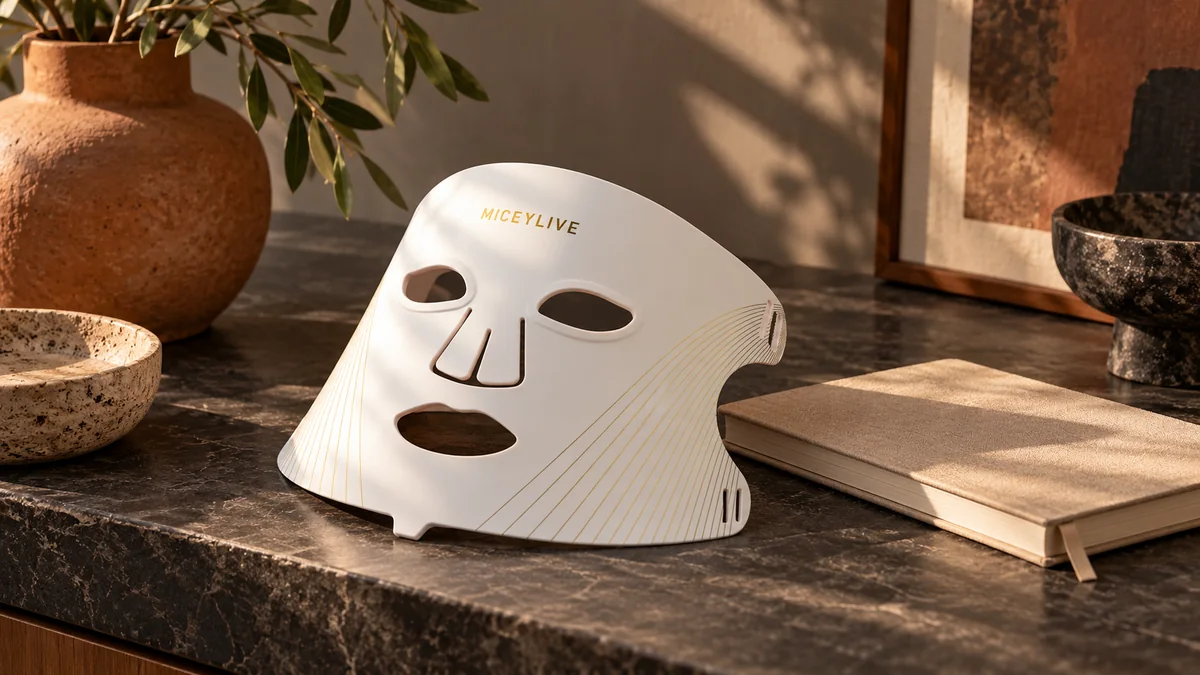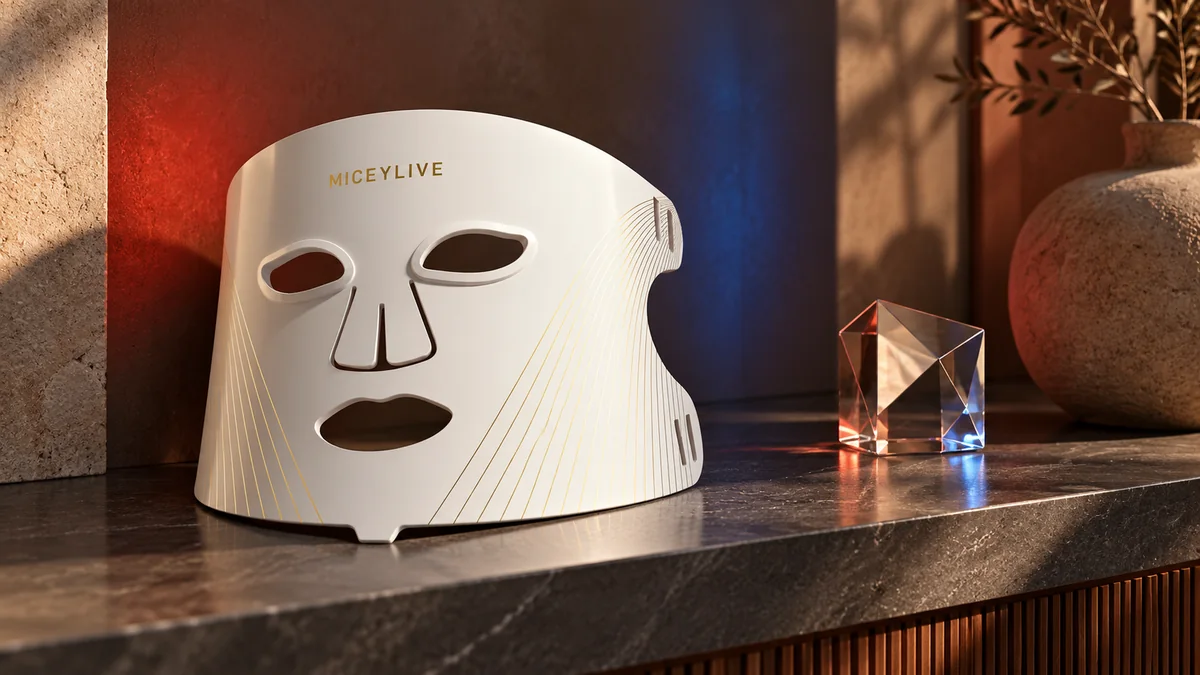
The Science of Light: How LED Face Masks Interact with Skin Cells
At MICEYLIVE, we help you understand face and body light-care formats before choosing a device.
Light-emitting diode (LED) facial therapy operates on the established biomedical principle of photobiomodulation (PBM). Unlike surgical ablative lasers or intense pulsed light (IPL) devices that remodel tissue through photothermal injury and controlled micro-damage, LED photobiomodulation is an entirely non-thermal and non-ablative photochemical process. When specific, calibrated wavelengths of visible and near-infrared light irradiate the skin, photons penetrate through cutaneous layers and are absorbed by endogenous cellular photoacceptors known as chromophores. This optical absorption stimulates mitochondrial respiration, accelerates adenosine triphosphate (ATP) synthesis, modulates intracellular reactive oxygen species (ROS), and initiates genetic signaling cascades that govern collagen synthesis, cellular proliferation, and inflammatory suppression. Modern home-use LED masks utilize narrow-band semiconductor diodes engineered to deliver targeted optical energy without emitting destructive ionizing ultraviolet (UV) radiation or tissue-coagulating heat.
Key Takeaways: Deconstructing LED Mask Colors
-
Non-Thermal Cellular Photochemistry: LED light therapy relies strictly on photobiomodulation (PBM), exciting endogenous cellular chromophores such as cytochrome c oxidase without generating tissue-damaging heat or ultraviolet radiation.
-
Tier 1 Clinical Gold Standard (Red & NIR Light): Red light (630–660 nm) and Near-Infrared light (830–850 nm) represent the most thoroughly validated wavelengths in medical photobiology. Red light accelerates mitochondrial ATP synthesis and procollagen production, while near-infrared penetrates into deep reticular and subcutaneous structures to downregulate systemic inflammation and stimulate tissue remodeling.
-
Targeted Acne Eradication (Blue Light): Blue light at 415 nm acts photochemically against Cutibacterium acnes by exciting bacterial coproporphyrin III, creating bactericidal singlet oxygen that destroys microbes without inducing antimicrobial resistance.
Wavelength Physics: Why Light Color Governs Penetration Depth
The therapeutic effect of any LED face mask is fundamentally governed by optical physics: specifically, the inverse relationship between photon energy and tissue penetration depth. Human skin is a turbid, highly scattering optical medium composed of distinct histological strata—the epidermis, dermis, and subcutaneous adipose tissue—each rich in competing biological chromophores such as melanin, oxyhemoglobin, deoxyhemoglobin, and intracellular water. High-energy, short-wavelength visible photons undergo intense optical Rayleigh scattering and rapid chromophore absorption, severely limiting their penetration depth. Shorter-wavelength blue light (400–470 nm, peaked clinically at 415 nm) is heavily absorbed by epidermal melanin and cellular porphyrins, confining its physical penetration to the superficial epidermis and upper infundibulum of sebaceous follicles (<1 mm). Because blue light cannot physically reach dermal fibroblasts, it is incapable of directly stimulating structural collagen or elastin remodeling.
As optical wavelengths increase across the visible spectrum, photon scattering decreases significantly, opening what biophysicists term the "optical therapeutic window". Mid-spectrum green light (515–535 nm, typically 525 nm) penetrates approximately 1 to 2 mm, terminating within the dermal-epidermal junction and the superficial papillary vascular plexus. Long-wavelength visible red light (630–660 nm, with clinical peaks at 633 nm and 660 nm) exhibits significantly reduced tissue scattering and lower melanin absorption, allowing photons to penetrate 2 to 3 mm into the dense extracellular matrix of the reticular dermis where structural fibroblasts reside. Extending further into the invisible spectrum, near-infrared (NIR) light (810–850 nm, centered at 830 nm) achieves the deepest tissue penetration of all aesthetic phototherapy wavelengths. Near-infrared photons penetrate 3 to 5 mm through the full thickness of the reticular dermis and into subcutaneous adipose tissue and superficial muscular structures, reaching cellular targets inaccessible to visible light.
Tier 1 Clinical Wavelengths: Red and Near-Infrared for Collagen and Cellular Repair
Visible red light, spanning 630 nm to 660 nm, is the cornerstone of non-invasive facial phototherapy and anti-aging photomedicine. At the cellular level, red light photons are selectively absorbed by unit IV of the mitochondrial respiratory chain: the enzyme complex known as cytochrome c oxidase (CCO). In stressed or aging cells, nitric oxide (NO) binds competitively to cytochrome c oxidase, displacing oxygen and inhibiting normal oxidative phosphorylation. Photon absorption in the 630–660 nm band photochemically dissociates nitric oxide from the enzyme's catalytic center, restoring oxygen binding, elevating the mitochondrial membrane electrochemical gradient, and drastically increasing the synthesis of cellular adenosine triphosphate (ATP). This metabolic surge triggers downstream transcriptional factors that activate dermal fibroblasts, accelerating the production of type I and type III procollagen fibers while downregulating matrix metalloproteinases (MMPs) that degrade extracellular tissue. Landmark controlled clinical trials by Wunsch and Matuschka (2014) and Russell et al. (2005) demonstrated that regular exposure to 633 nm red light significantly increases ultrasonographically measured intradermal collagen density, refines skin roughness, and reduces periorbital wrinkle volume in human subjects.
Near-infrared light operating between 830 nm and 850 nm complements red light by targeting deeper vascular and subcutaneous architectures. Because near-infrared light lies just beyond the visible human spectrum, it does not elicit a pupillary constriction reflex, yet its optical photons penetrate up to 5 mm into subcutaneous tissue. At 830 nm, near-infrared light stimulates endothelial cells and deep perivascular fibroblasts, promoting local microcirculation, oxygen delivery, and lymphatic clearance while exerting potent anti-inflammatory effects. Studies in dermatological surgery demonstrate that 830 nm NIR light markedly reduces post-inflammatory erythema, downregulates pro-inflammatory cytokines such as IL-1β and TNF-α, and accelerates wound healing kinetics. When medical-grade devices deploy simultaneous dual-wavelength arrays—pairing 633 nm visible red with 830 nm near-infrared—the clinical outcome exhibits a profound synergistic effect, addressing superficial dermal texture alongside deep structural remodeling.
Targeting Breakouts: How Blue Light Eliminates Acne Bacteria
Blue light therapy, precisely calibrated at 415 nm, operates via an entirely different biological pathway than red or near-infrared photobiomodulation. Rather than stimulating mammalian mitochondrial respiration, 415 nm blue light targets the metabolic vulnerabilities of Cutibacterium acnes (formerly Propionibacterium acnes), the primary gram-positive anaerobic bacterium responsible for inflammatory acne vulgaris. As part of its natural cellular metabolism, C. acnes produces and accumulates high intracellular concentrations of endogenously synthesized photosensitizers, predominantly coproporphyrin III and protoporphyrin IX. When skin is irradiated with narrow-band 415 nm blue light, these porphyrins absorb the incident photons with high spectral affinity, transferring energy to surrounding intracellular molecular oxygen. This photodynamic reaction produces reactive oxygen species (ROS), most notably highly cytotoxic singlet oxygen (¹O₂), which induces rapid lipid peroxidation of the bacterial cell wall and triggers autogenous bacterial lysis. Because this bactericidal mechanism is purely photochemical, C. acnes cannot mutate or develop biological resistance, distinguishing blue light therapy from topical and oral antibiotics.
While monotherapy with 415 nm blue light produces documented reductions in inflammatory papules, optimal dermatological protocols mandate combining blue light with visible red light. Clinical research by Kawada et al. (2002) and Lee et al. (2007) confirmed that combining 415 nm blue light and 633 nm red light yields significantly superior clearance of inflammatory acne lesions compared to blue light alone. Pure blue light lacks penetration beyond 1 mm and carries slight pro-inflammatory potential if sebaceous follicles are acutely inflamed. Concurrently or sequentially administering red light (633 nm) penetrates deep into the follicular infundibulum to calm surrounding tissue inflammation, downregulate perifollicular erythema, and stimulate post-acne tissue repair, preventing the development of secondary post-inflammatory hyperpigmentation.
Beyond the Basics: The Truth About Green, Yellow, and 7-Color Rainbow Masks
Green light, emitted across the 515 nm to 535 nm band (typically centered at 525 nm), is widely promoted by consumer beauty brands for fading hyperpigmentation, treating melasma, and brightening uneven skin tone. The theoretical rationale behind green light posits that 525 nm photons target epidermal melanocytes located at the dermal-epidermal junction (1–2 mm depth), downregulating tyrosinase activity and accelerating the dispersal of existing melanin clusters. However, in dermatological photobiology, green light remains classified as a Tier 3 experimental modality. Unlike red and blue light, which are supported by hundreds of peer-reviewed randomized controlled human trials, the clinical evidence for green light consists largely of small-scale in vitro cell cultures and uncontrolled pilot studies. Clinical dermatologists emphasize that while green light is non-invasive, consumers should not expect dramatic clearance of deep stubborn pigmentation or hormonal melasma from consumer green LED masks.
Yellow and amber light, spanning 585 nm to 605 nm (commonly centered at 590 nm), penetrates approximately 1.5 to 2 mm into the papillary and upper reticular dermis, precisely reaching the superficial vascular plexus. In this vascular layer, 590 nm photons are absorbed by oxyhemoglobin within capillary loops. Preliminary clinical observations suggest that yellow light can modulate vascular endothelial growth factors, reduce facial erythema, soothe superficial flushing in mild rosacea, and accelerate the resolution of cutaneous bruising following cosmetic injectable procedures. However, yellow light is categorized as a Tier 2 preliminary modality: while biophysically plausible, commercial masks frequently deliver inadequate irradiance in this band, rendering results subtle compared to vascular pulsed dye lasers or medical-grade NIR anti-inflammatory therapy.
In recent years, budget e-commerce platforms have been flooded with inexpensive "7-color" or "8-color" rainbow LED face masks advertising purple, cyan, orange, and white light settings. From an optical engineering perspective, these multi-color consumer masks are almost universally marketing gimmicks. Medical-grade LED phototherapy devices utilize discrete, dedicated monochromatic semiconductor chips engineered to emit precise wavelengths with an extremely narrow full-width at half-maximum (FWHM < 15 nm) and a calibrated therapeutic irradiance of 30 to 50 mW/cm². In contrast, budget 7-color masks utilize cheap tri-color RGB (red-green-blue) multi-chip diodes packaged together on a single surface-mount component. To produce "purple light," the device simply illuminates red and blue sub-chips simultaneously; to produce "cyan," it blends green and blue; and to produce "white," it blends all three. These hybrid multi-chip LEDs suffer from severe spectral dispersion (FWHM > 30–50 nm), split electrical drive currents, and deliver sub-therapeutic irradiance levels often below 5 to 10 mW/cm²—far below the optical threshold required to trigger biological photobiomodulation in human tissue.
Clinical Evidence & Optical Specifications Comparison Matrix
| Light Color | Wavelength Range | Target Chromophore | Anatomical Depth | Primary Clinical Application | Evidence Tier |
|---|---|---|---|---|---|
| Red Light | 630–660 nm (Peak 633 nm) | Cytochrome c oxidase (Unit IV) | Reticular Dermis (2–3 mm) | Collagen synthesis, wrinkle reduction, skin rejuvenation | Tier 1: Clinical Gold Standard |
| Near-Infrared | 830–850 nm (Peak 830 nm) | Water, Cytochrome c oxidase, Hemoglobin | Reticular Dermis & Subcutis (3–5 mm) | Deep cellular repair, microcirculation, anti-inflammation | Tier 1: Clinical Gold Standard |
| Blue Light | 410–420 nm (Peak 415 nm) | Bacterial Coproporphyrin III | Epidermis & Infundibulum (<1 mm) | C. acnes eradication, inflammatory acne clearance | Tier 1: Clinical Gold Standard |
| Yellow / Amber | 585–605 nm (Peak 590 nm) | Oxyhemoglobin & Microvasculature | Papillary Dermis (1.5–2 mm) | Erythema calming, flushing reduction, lymphatic drainage | Tier 2: Preliminary Evidence |
| Green Light | 515–535 nm (Peak 525 nm) | Melanosomes & Melanocytes | Dermal-Epidermal Junction (1–2 mm) | Mild hyperpigmentation, superficial brightening | Tier 3: Experimental / Limited |
| Purple Light | Blend: 415 nm + 633 nm | Porphyrins & Mitochondria | Stratified (0.5 mm & 2.5 mm) | Dual acne clearing and tissue calming | Tier 2: Dual Mode (Conditional) |
| Cyan / White | RGB Multi-Chip Blend | Broad non-specific absorption | Dispersed / Variable | Commercial marketing modes without independent trials | Tier 3: Sub-Therapeutic Gimmick |
In this comparative hierarchy, Red light remains the undisputed benchmark for dermal remodeling and anti-aging, verified across decades of dermatological literature.
Near-infrared light provides essential penetration depth (3–5 mm) that no visible wavelength can replicate, making it an indispensable partner to red light for cellular bio-stimulation.
Blue light at 415 nm provides targeted, non-antibiotic destruction of acne-causing bacteria within superficial sebaceous follicular openings.
Understanding exact tissue penetration depth is the single most reliable way for consumers to evaluate color claims, ensuring realistic expectations based on optical physics.
Green light should be recognized as an experimental setting with limited human trial backing, rather than a proven medical cure for stubborn hyperpigmentation or melasma.
Yellow light shows genuine preliminary promise for soothing superficial facial erythema, provided the device delivers adequate optical power to the papillary microvasculature.
Combining complementary wavelengths, such as 633 nm red with 830 nm NIR or 415 nm blue with 633 nm red, delivers superior therapeutic efficacy compared to isolated monochromatic treatments.
Safety, Retinal Protection, and Contraindications: How to Choose a Medical-Grade Mask
While photobiomodulation is inherently gentle and non-thermal, home phototherapy devices are high-intensity optical systems that demand strict safety compliance. The most critical biological vulnerability during facial light therapy is ocular exposure. Visible blue light (400–470 nm) carries photoretinal hazard risks governed internationally by the International Electrotechnical Commission standard IEC 62471 ("Photobiological Safety of Lamps and Lamp Systems"). Prolonged direct exposure to high-intensity blue photons can induce photochemical damage to retinal pigment epithelium (RPE) cells and accelerate maculopathy. While visible red and near-infrared light are considered ocularly safer, looking directly into bright diodes during a treatment session can cause temporary visual flash glare, pupillary fatigue, and migraines. Consequently, clinical standards dictate that any LED face mask emitting blue light must incorporate built-in opaque silicone eye gaskets or include certified blackout safety goggles.
Dermatologists issue a vital medical caution for individuals diagnosed with melasma or post-inflammatory hyperpigmentation (PIH), particularly those with Fitzpatrick skin phototypes IV through VI. Melasma is a complex, hyperactive melanocytic disorder that is readily exacerbated by thermal accumulation. In poorly engineered, poorly ventilated, or overly high-fluence LED masks, accumulated heat against the facial skin can trigger paradoxical melanogenesis, causing melasma patches to darken rather than fade. Melasma-prone patients must select devices that operate strictly non-thermally without heat accumulation and should approach near-infrared modes with conservative exposure times. Additional contraindications include the concurrent use of photosensitizing medications (such as isotretinoin, doxycycline, tetracycline, methotrexate, and topical retinoids), active cutaneous lesions, light-sensitive epilepsy, and autoimmune disorders such as lupus erythematosus.
When shopping for an LED face mask, consumers must understand the regulatory significance of United States Food and Drug Administration (FDA) clearance. Commercial brands frequently claim their devices are "FDA approved," which is a legally misleading assertion. Over-the-counter aesthetic LED devices are cleared under the FDA 510(k) premarket notification pathway as Class II cosmetic medical devices. This clearance establishes "substantial equivalence" to existing legally marketed predicate devices in terms of electrical safety, biocompatibility of facial contact materials, optical radiation safety, and non-thermal operation. FDA 510(k) clearance confirms that a device meets rigorous federal safety and manufacturing benchmarks, but it does not represent an independent medical endorsement or a guarantee of clinical efficacy.
6-Point Verification Checklist for Choosing a Safe, Effective LED Mask
-
Certified Ocular Protection (IEC 62471 Compliant): Ensure the mask includes integrated opaque silicone eye gaskets or certified blackout goggles that completely seal the orbital area, mandatory for all blue light treatments.
-
Non-Thermal Operation for Melasma Safety: Verify that the mask chassis remains cool to the touch throughout the entire treatment cycle, preventing thermal accumulation that triggers pigment rebound in melasma-prone skin.
-
FDA 510(k) Class II OTC Clearance: Confirm that the manufacturer holds an active FDA 510(k) premarket clearance number as a Class II over-the-counter device, verifying substantial equivalence and electrical safety standards.
Frequently Asked Questions About LED Mask Colors and Treatments
Understanding treatment parameters and biological mechanisms helps users maximize clinical results from at-home phototherapy routines.
Expert Q&A: LED Face Mask Colors and Protocols
-
Can I use different LED mask colors on the same day? Yes, but treatments should be targeted and staged appropriately. In clinical dermatology, combining wavelengths is standard practice—most notably following an acne-clearing blue light session with a soothing red light session to accelerate tissue healing. However, avoid excessive cumulative treatment durations; adhering to 10 to 15 minutes per session three to five times weekly ensures optimal cellular response within the Arndt-Schulz biphasic therapeutic window.
-
Should I use red or blue light first when treating acne? When managing active breakout episodes, clinicians recommend administering 415 nm blue light first to target and destroy Cutibacterium acnes within the follicular infundibulum. Following blue light exposure with 633 nm red light immediately calms secondary inflammatory erythema and initiates dermal collagen repair.
-
Does green LED light work as well as red light for skin concerns? No. While green light (~525 nm) shows preliminary theoretical promise for surface brightening, red light (633 nm) is backed by extensive, rigorous clinical trials demonstrating proven collagen regeneration and wrinkle reduction. Green light should be viewed as an experimental adjunctive setting rather than a replacement for Tier 1 wavelengths.
-
Why do dermatologists prefer combining Red and Near-Infrared light together? Red light (633 nm) and Near-Infrared light (830 nm) target complementary histological depths. Red light stimulates mitochondrial ATP synthesis in the upper and mid-dermis, while near-infrared penetrates up to 5 mm into the reticular dermis and subcutaneous layers to stimulate microcirculation and downregulate deep inflammatory cascades. Simultaneous dual-wavelength irradiation produces documented synergistic improvements in skin texture and elasticity.
-
Are inexpensive 7-color rainbow LED masks effective? Generally, no. Budget 7-color masks rely on cheap multi-chip RGB diodes that blend colors electronically, resulting in broad spectral dispersion (FWHM > 30 nm) and sub-therapeutic irradiance levels (< 10 mW/cm²). Medical-grade devices deploy dedicated, narrow-band LEDs that deliver calibrated therapeutic doses supported by published photobiological literature.
Compare the documented controls and formats in our MICEYLIVE face light therapy collection.
For the next step, read our guide to Do LED Face Masks Really Work? A Dermatological & Biophysical Guide.