The Non-Negotiable Rule: Clean, Dry, Bare Skin as the Clinical Baseline
At MICEYLIVE, we help you understand face and body light-care formats before choosing a device.
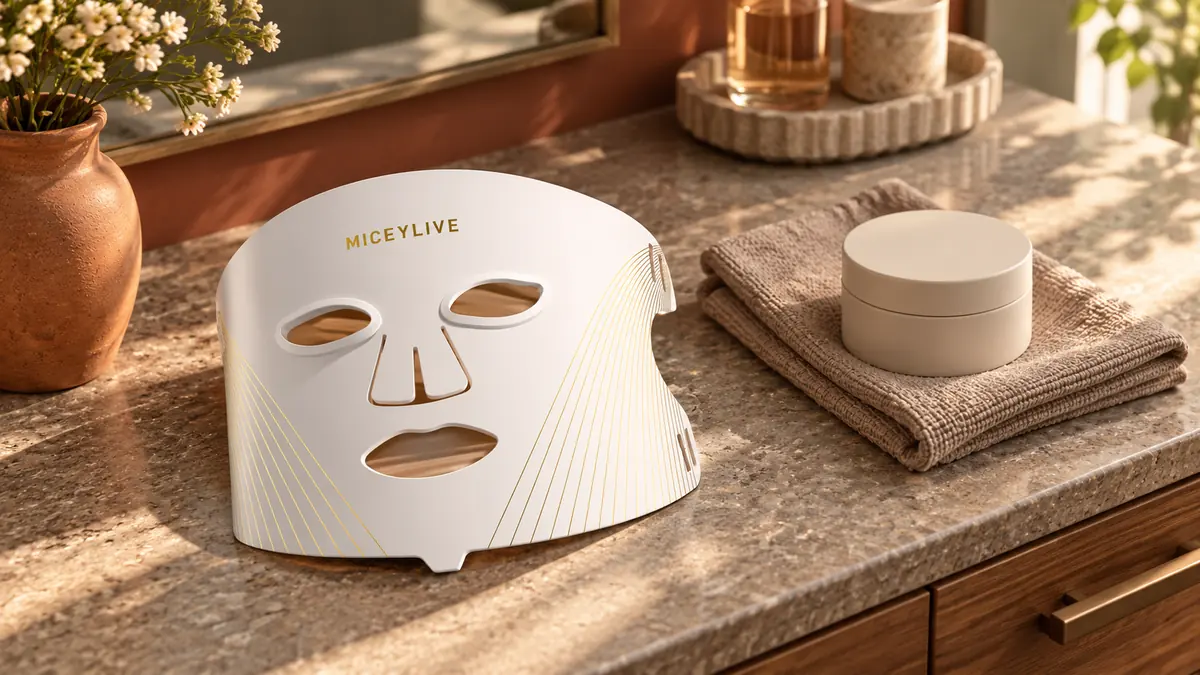
Integrating an at-home light-emitting diode (LED) face mask into a daily skincare regimen inevitably introduces a critical sequencing dilemma: should light therapy be administered onto completely bare skin, or layered on top of toners, essences, and hydrating serums? Across clinical photomedicine literature and standardized dermatological protocols, the answer is unequivocal: an LED face mask must always be applied directly to clean, dry, bare skin. This foundational prerequisite represents the non-negotiable baseline for ensuring unhindered photon transmission to dermal chromophores without optical reflection, lateral refraction, or unwanted surface absorption by cosmetic residues.
The physical state of the stratum corneum at the exact moment of device placement determines the uniformity of the delivered energy dose. When light transitions from ambient air into human cutaneous tissue, any surface liquid introduces microscopic optical anomalies. Water droplets or residual dampness from washing act as irregular convex micro-lenses that scatter incident rays laterally, creating severe optical hot spots and non-uniform dosing across the facial landscape. Furthermore, residual moisture can bridge device contact points or compromise optical coupling. Consequently, dermatological consensus mandates that after thorough cleansing, the face must be gently patted completely dry with a clean towel before donning the device.
Key Clinical Takeaways: LED Mask Skincare Order
-
The Bare-Skin Standard: Light therapy must be applied to freshly cleansed, completely dry skin to guarantee unhindered photon penetration into dermal fibroblasts.
-
Zero Pre-Mask Sunscreen: Mineral sunscreens containing zinc oxide or titanium dioxide reflect and scatter up to 100% of therapeutic light and must never precede an LED session.
-
Bone-Dry Skin Prerequisite: Patting the skin completely dry prevents water droplets from acting as micro-lenses that distort irradiance uniformity.
-
Actives Strictly Post-Treatment: Potent cellular stimulants like topical retinoids and AHA/BHA chemical exfoliants must be applied after your session to prevent heat-and-occlusion dermatitis.
-
Post-LED Absorption Window: Photobiomodulation induces transient nitric oxide microvascular vasodilation, creating an optimal 15-to-30-minute window for subsequent antioxidant and serum absorption.
-
Mandatory Daytime SPF: Following any morning LED light therapy treatment, broad-spectrum sunscreen (SPF 30+) is an absolute requirement to preserve newly synthesized collagen from ultraviolet damage.
Optical Barriers: How Mineral Sunscreen, Creams, and Oils Block Light
A frequent and costly error among consumer device owners is wearing an LED face mask over daytime skincare products containing sun protection factors (SPF). Physical and mineral sunscreens formulate inorganic particulates—principally micronized zinc oxide (ZnO) and titanium dioxide (TiO2)—specifically designed to manipulate optical physics. These inorganic crystals possess exceptionally high refractive indices (n ≈ 2.0 to 2.6), engineered expressly to reflect, back-scatter, and absorb electromagnetic radiation across both ultraviolet and visible spectra. When an LED mask is placed over mineral sunscreen, incident red (630–660 nm) and near-infrared (830–850 nm) photons encounter an impassable particulate barrier, reflecting back into the diode housing and completely negating therapeutic tissue penetration.
Similarly, rich cosmetic creams, heavy barrier balms, and facial oils present formidable biophysical barriers to photon propagation. The human stratum corneum possesses a baseline refractive index of approximately 1.5. When heavy lipid formulations, petrolatum, or occlusive squalane layers are spread across the epidermis, they alter the refractive boundary between ambient air and the skin surface. These dense emulsions induce pronounced Rayleigh and Mie scattering, refracting incident light laterally along the epidermal plane rather than allowing perpendicular propagation into target fibroblasts within the reticular dermis. Layering heavy moisturizers or facial oils prior to light exposure significantly attenuates target fluence, turning an otherwise therapeutic 10-minute session into a sub-therapeutic exposure.
The Hyaluronic Acid Dilemma: Can You Apply Hydrating Serums Before the Mask?
In skincare forums and social media communities, no topic generates more heated debate than whether hyaluronic acid (HA) serums can be applied beneath an LED face mask. Enthusiasts frequently claim that applying a serum beforehand boosts hydration through device heat, while purists argue that anything placed between diodes and skin blocks light. From a clinical photobiological perspective, bare skin remains the gold standard against which all clinical trials are calibrated. Clean, dry skin ensures zero alteration of calibrated device irradiance (typically 20 to 40 mW/cm²) and eliminates unwanted surface interactions.
However, an evidence-based dermatological exception exists under strictly qualified conditions: pure watery hyaluronic acid formulations. Water-based humectants consisting solely of low-to-medium molecular weight sodium hyaluronate in an aqueous base possess a refractive index (n ≈ 1.33 to 1.34) very close to biological epidermal fluids. Provided the formulation is completely devoid of cosmetic oils, heavy thickeners, silicones (such as dimethicone), and active photosensitizers, a thin layer of watery HA does not meaningfully impede red or near-infrared light transmission. Nonetheless, this protocol is purely conditional; if the serum contains lipid emulsifiers, fragrance, or cloudy botanical extracts, it creates optical scattering and must be reserved strictly for post-treatment application.
Active Ingredient Safety: Why Retinoids and Exfoliating Acids Must Wait
Skincare Active Compatibility & Timing Matrix
-
Topical Retinoids (Retinol, Tretinoin): Pre-Mask Timing: Strictly Prohibited. Post-Mask Timing: Highly Recommended in Evening. Device occlusion and diode contact warmth dramatically accelerate retinoid penetration kinetics, provoking acute contact dermatitis and severe peeling.
-
AHA & BHA Chemical Exfoliants (Glycolic, Salicylic Acid): Pre-Mask Timing: Strictly Prohibited. Post-Mask Timing: Permissible in Evening or on Alternating Days. Acidic formulations lower skin surface pH and disrupt barrier lipids; trapping acids beneath silicone masks induces intense stinging and barrier sensitization.
-
Topical Vitamin C (L-Ascorbic Acid): Pre-Mask Timing: Not Recommended. Post-Mask Timing: Highly Recommended in Morning. Post-treatment microcirculation optimizes antioxidant bio-distribution while red light and vitamin C synergize to stabilize collagen cross-linking.
-
Pure Watery Hyaluronic Acid: Pre-Mask Timing: Conditional (100% oil-free and clear watery formulations only). Post-Mask Timing: Highly Recommended. While bare skin remains the baseline, watery humectants present minimal optical impedance.
-
Facial Oils & Heavy Barrier Creams: Pre-Mask Timing: Strictly Prohibited. Post-Mask Timing: Highly Recommended as Final Evening Step. Dense lipid films cause optical impedance mismatches and scatter incident photons away from deep dermal targets.
-
Mineral Sunscreens (Zinc Oxide / Titanium Dioxide): Pre-Mask Timing: Strictly Prohibited. Post-Mask Timing: Mandatory Morning Step. Mineral crystals possess refractive indices exceeding 2.0, reflecting and scattering up to 100% of therapeutic light.
The most hazardous sequencing mistake in consumer light therapy involves layering potent topical retinoids—including over-the-counter retinol, retinaldehyde, prescription tretinoin, or tazarotene—immediately before putting on an LED face mask. Topical retinoids function by accelerating epidermal turnover and altering stratum corneum cohesion. When a flexible silicone LED mask is strapped firmly over skin pre-treated with retinoids, the device creates an occlusive micro-environment. Minor semiconductor heat generated by operating LEDs (surface temperatures reaching 35°C to 38°C) drastically increases cutaneous blood flow and trans-epidermal drug penetration kinetics. Trapping retinoids under heat and mechanical occlusion triggers severe acute contact dermatitis, marked by intense erythema, burning, and barrier peeling. Retinoids must be applied strictly after light therapy has concluded.
An identical cautionary rule governs chemical exfoliants, including alpha-hydroxy acids (glycolic, lactic, mandelic acid) and beta-hydroxy acids (salicylic acid). Chemical exfoliants operate by cleaving desmosomal bonds between corneocytes and temporarily lowering skin surface pH into an acidic range (pH 3.0 to 4.0). Trapping acidic chemical compounds beneath an occlusive mask induces profound sensory nerve irritation and localized cutaneous sensitization. Applying chemical exfoliants immediately before LED exposure not only risks chemical burning but also destabilizes the epidermal lipid barrier right as light energy is delivered. Exfoliating acids should be used after your LED session in an evening routine, or ideally alternated on non-LED days.
Post-Treatment Synergy: Why Vitamin C and Serums Absorb Better After LED
While applying active skincare products before an LED face mask introduces severe optical and dermatological risks, applying them immediately after your session delivers extraordinary biological synergy. During a 10-to-15-minute photobiomodulation session, red and near-infrared photons excite cytochrome c oxidase within dermal mitochondria, leading to the photo-dissociation of bound nitric oxide (NO). As nitric oxide is released into local tissue, it acts as a potent signaling molecule that triggers smooth muscle relaxation in microvascular capillary beds. This process induces transient microvascular vasodilation and localized hyperemia, markedly increasing cutaneous blood perfusion and oxygenation for 15 to 30 minutes following treatment.
This 15-to-30-minute post-treatment hyperemic window creates an ideal physiological environment for topical active ingredient absorption. When topical vitamin C (L-ascorbic acid or stabilized derivatives like tetrahexyldecyl ascorbate) is massaged into freshly irradiated skin, local microcirculation accelerates cutaneous bio-distribution. Furthermore, photobiomodulation and vitamin C share an intimate biochemical partnership. While red light upregulates procollagen mRNA transcription in fibroblasts, L-ascorbic acid functions as the indispensable enzymatic co-factor for prolyl and lysyl hydroxylase, the enzymes responsible for stabilizing collagen triple-helix bundles. Applying vitamin C immediately after your morning LED mask session provides powerful antioxidant defense while catalyzing structural collagen cross-linking.
Morning vs. Evening: Aligning Light Therapy with Your Circadian Rhythms
Another frequent dilemma faced by device owners is whether light therapy performs more effectively when scheduled as a morning ritual or an evening wind-down routine. The human skin is not biologically static throughout the 24-hour day; rather, cutaneous physiology is strictly regulated by peripheral circadian clock genes that dictate daily peaks in barrier permeability, blood flow, and repair kinetics. Morning LED sessions are uniquely suited for stimulating cutaneous microcirculation and promoting lymphatic clearance. Waking up with morning facial puffiness or sluggish periorbital circulation responds rapidly to 10 minutes of red and near-infrared phototherapy, which stimulates lymphatic drainage channels and awakens a dull, tired complexion before daily activities.
Conversely, evening LED sessions align directly with the body's natural nocturnal regenerative window. Chrono-biological studies demonstrate that cutaneous DNA repair, cellular mitosis, and fibroblast procollagen synthesis peak between 11 PM and 4 AM while the body is at rest. Concurrently, skin barrier permeability increases in the late evening, making nocturnal tissue highly receptive to cellular biostimulation. Administering an LED session in the evening delivers a burst of mitochondrial ATP synthesis right before peak cellular mitosis, providing fibroblasts with abundant metabolic fuel for overnight collagen assembly and cellular turnover. Ultimately, while morning treatments optimize circulation and evening treatments optimize structural repair, consistent adherence across an 8-to-12-week course is the decisive factor for long-term clinical rejuvenation.
The 5-Step AM and PM Routine Blueprints (Plus Mandatory SPF)
The 5-Step AM & PM LED Mask Skincare Checklist
-
Morning Step 1 (Gentle Cleansing): Wash with a mild, non-stripping cleanser to lift overnight sebum. Rinse thoroughly.
-
Morning Step 2 (Bone-Dry Prep): Gently pat the entire face completely dry with a clean towel; verify no moisture droplets remain.
-
Morning Step 3 (LED Session 10–15 Min): Secure the device on bare, clean skin to awaken dull facial microcirculation and clear lymphatic fluid.
-
Morning Step 4 (Active Antioxidant Serum): Apply Vitamin C or peptide serum immediately after mask removal to exploit the post-PBM vasodilation window.
-
Morning Step 5 (Moisturizer & Mandatory Broad-Spectrum SPF 30+): Seal in hydration and shield newly stimulated dermal cells from UV degradation.
-
Evening Step 1 (Double Cleansing): Thoroughly dissolve makeup, pollutants, and daytime sunscreen with an oil cleanser followed by a gentle gel wash.
-
Evening Step 2 (Pat Dry & Zero Actives): Ensure skin is bone-dry; resist the urge to apply hydrating toners or face oils beforehand.
-
Evening Step 3 (LED Session 10–15 Min): Administer red and near-infrared light to energize fibroblast mitochondria before peak nocturnal mitosis.
-
Evening Step 4 (Potent Active Treatment): Apply your topical retinoid (retinol or tretinoin) safely now that light exposure and occlusion have ended.
-
Evening Step 5 (Nourishing Barrier Night Cream): Lock in cellular repair with a rich ceramide cream or nourishing oil to support overnight renewal.
The single most critical directive in morning routine sequencing is the non-negotiable application of broad-spectrum sunscreen (SPF 30 or higher) as the final daytime step. While non-thermal red and near-infrared light therapy does not cause acute UV photosensitivity or induce sunburn, photobiomodulation fundamentally accelerates cellular turnover and metabolic signaling in the dermis. Exposing newly activated, collagen-synthesizing fibroblasts to unfiltered daytime ultraviolet radiation (UVA and UVB) triggers matrix metalloproteinase-1 (MMP-1) collagenase enzymes that aggressively degrade newly formed procollagen fibers. Skipping sunscreen completely negates the hard-won anti-aging gains delivered by your LED face mask.
Frequently Asked Questions About LED Face Mask Routines
Q: Do I need to wash my face after using an LED face mask? A: No, you do not need to wash your face after a light therapy session. Because your mask was placed onto freshly cleansed, clean skin, your stratum corneum is completely ready for post-treatment serums and moisturizers. Washing again would unnecessarily strip protective natural barrier lipids.
Q: Can I wear a sheet mask underneath my LED face mask? A: Generally, no. Unless a sheet mask is engineered specifically from transparent, ultra-thin biocellulose by the device manufacturer, standard cotton or hydrogel sheet masks contain thick emulsions, preservatives, and opaque fibers that absorb and reflect incident photons. Save your sheet mask to use after your LED session as a soothing post-treatment hydration step.
Q: Can I apply makeup immediately after my morning LED session? A: Yes, you can safely apply cosmetics after your morning light therapy treatment. However, ensure you apply your antioxidant serum, moisturizer, and broad-spectrum sunscreen first, allowing each layer 1 to 2 minutes to absorb before applying foundation or concealers.
Q: What should I do if my face looks slightly pink or flushed after a session? A: Mild, transient pinkness is a normal physiological sign of microvascular vasodilation and nitric oxide release, indicating enhanced blood flow to dermal tissue. It typically resolves naturally within 15 to 30 minutes. Apply a soothing hyaluronic acid or ceramide moisturizer and always finish with sunscreen if going outside.
Compare the documented controls and formats in our MICEYLIVE face light therapy collection.
For the next step, read our guide to How to Use an LED Face Mask: The Definitive Routine & Care Guide.